
Graston Technique: A Focused Approach to Stubborn Tissue
Let me tell you about a man named Tom who came to see me with a shoulder that had been bothering him for over a year. He was a carpenter, and every time he lifted his arm to hammer a nail, a sharp pain stopped him cold. He had tried rest, he had tried stretching, he had tried ignoring it. Nothing worked. When I mentioned the Graston Technique, he looked confused. “Is that like scraping?” he asked. I told him it was a bit like that, but much more precise. He was willing to try anything at that point. After a few sessions, the knot of scar tissue that had been binding his shoulder started to break up. He could hammer again, then reach overhead, then work a full day without pain. Tom still comes by sometimes to show me pictures of his latest projects. That is what the Graston Technique can do. It helps when soft tissue gets stuck and nothing else will set it free.
What Is the Graston Technique, Really?
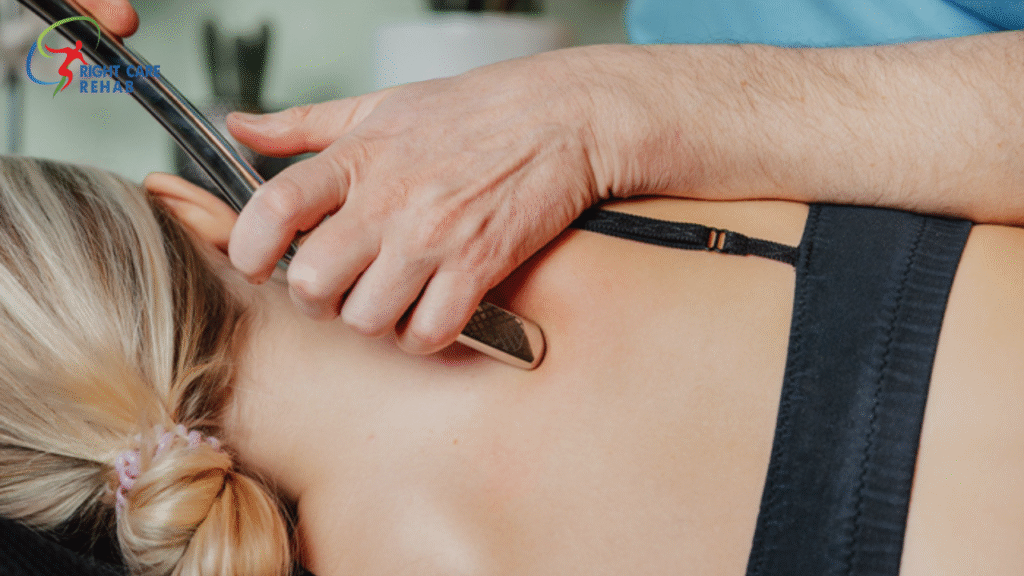
Let me explain this in plain language. The Graston Technique uses specially designed stainless steel tools to treat soft tissue problems. These tools are shaped to fit different parts of your body, curved for necks, angled for backs, rounded for knees. Your therapist uses them to gently scan and then treat areas where muscles, tendons, or ligaments have become tight, scarred, or stuck. Think of it like a very precise, very controlled massage. The tools allow your therapist to feel things their hands might miss. Small bumps, tight bands, areas of scar tissue. Then they use the tools to apply pressure in a way that breaks up that stuck tissue and stimulates blood flow to the area. It sounds intense, but it is actually very controlled. At Right Care Rehab, we use the Graston Technique for specific problems that need more than a regular massage can provide.
What Conditions Respond Well to This Approach
The Graston Technique shines with chronic soft tissue issues, the kind that have been hanging around for months or even years. It is excellent for tendon problems like tennis elbow, golfer’s elbow, and Achilles tendinitis. Plantar fasciitis, that stubborn heel pain, often responds well. It can help with scar tissue from old injuries or surgeries that is limiting your movement. Neck and back pain that comes from tight, ropey muscles can improve. Even conditions like carpal tunnel syndrome or IT band tightness sometimes benefit. The common thread is tissue that has become stuck, thickened, or scarred. If your problem is fresh and acute, the Graston Technique might not be the right first step. But if you have a stubborn area that will not let go, it is worth exploring. At Right Care Rehab, we will assess your specific issue and tell you honestly if this technique fits.
Why Scar Tissue Matters
To understand why this technique works, you need to understand scar tissue. When you injure yourself, your body rushes to repair the damage. It lays down new tissue, like patching a hole in a wall. But that new tissue is not as organized as the original. It can be thick, ropey, and sticky. It can bind to nearby tissues, limiting your movement and causing pain. Over time, that scar tissue can become the problem itself, even after the original injury has healed. The Graston Technique helps break up that disorganized tissue so your body can replace it with healthier, more flexible tissue. It is like weeding a garden so the good plants have room to grow. At Right Care Rehab, we use this approach to help your body clear out the old and make way for the new.
The Science Behind the Tools
The Graston Technique is not just folk wisdom. It has research behind it. The tools create micro trauma in the scar tissue, tiny disruptions that signal your body to send fresh blood and healing cells to the area. This process breaks down the old, tangled fibers and stimulates new collagen production. The result is tissue that is more aligned, more flexible, and less painful. It also helps reset the nerves in the area. Sometimes chronic pain persists because the nerves have become hypersensitive. The Graston Technique can help calm that overactive nerve response. It is a way of telling your body, “We are healing here, not hurting.” At Right Care Rehab, we use this technique as part of a larger plan to restore healthy movement.
Graston as Part of Your Team
We never use the Graston Technique alone. It works best when combined with other smart care. After we break up the scar tissue, we need to help you move properly so that new tissue lays down in the right direction. Your physiotherapist might give you specific exercises to stretch and strengthen the area. Your massage therapist might work on the surrounding muscles that have been compensating. We might use other modalities like laser or shockwave to support the healing. Everything is coordinated. Your Graston provider talks to your other therapists so we are all working toward the same goal. At Right Care Rehab, your care is a team effort, and you are the most important member.
Is the Graston Technique Safe?
Safety is always our first concern. The Graston Technique is very safe when performed by a trained professional. There are some situations where we would use caution. If you have an infection, a blood clot, or certain skin conditions, we might wait. If you are taking blood thinners, we need to know. We also avoid areas with recent fractures or surgical hardware. Before any treatment, we do a full assessment and review your health history. We want to make sure this is the right choice for you. At Right Care Rehab, we never take risks with your wellbeing. You can trust us to be honest and careful.
A Tool for Stubborn Problems
If you have a nagging ache that will not quit, a spot that has been tight for months, a scar from an old injury that still limits you, the Graston Technique might be worth a conversation. It is not magic, but it is a powerful tool for the right problems. Tom got his shoulder back. Others have gotten their knees, their elbows, their heels. You deserve to move without that old stuck pain holding you back. At Right Care Rehab, we are here to listen, to assess, and to help you find the path forward. Call us today and let us explore whether the Graston Technique could help you finally let go of what has been holding you back.
