
Shockwave Therapy: A New Approach to Stubborn Pain
Let me tell you about a patient named David. He was a mail carrier, walked miles every day, and loved his job. But for months, a sharp pain in his heel made every step miserable. He tried new shoes, he tried ice, he tried resting on weekends. Nothing worked. When he came to see us, he was worried his career might be over. We talked about shockwave therapy, and he looked at me with doubt in his eyes. “Sound waves?” he asked. “That sounds like science fiction.” I smiled and told him that sometimes the best solutions sound a little strange at first. He agreed to try it, and after a few sessions, the pain that had haunted his steps finally started to fade. David went back to walking his route, and he stops by sometimes just to say hello. That is what shockwave therapy can do. It is not magic. It is science, and it helps when other things have failed.
What Is Shockwave Therapy, Really?
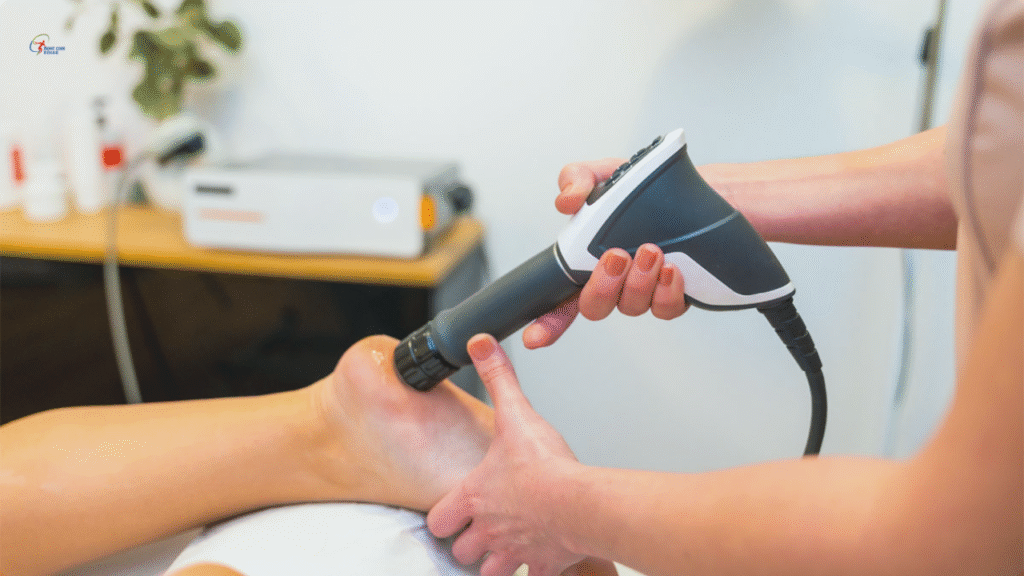
Let’s clear up the confusion right away. Shockwave therapy does not involve electricity or anything that shocks you. The name makes it sound dramatic, but the experience is much gentler. A machine sends pulses of sound energy into the sore area of your body. These pulses are targeted and precise. Think of it like tapping on a door to get someone’s attention. The sound waves create a little bit of controlled micro trauma in the tissue. That sounds bad, but it is actually good. It wakes up your body’s natural healing processes. Fresh blood flows to the area. Cells that repair tissue get activated. Old scar tissue can start to break down. It is like telling your body, “Hey, we need to fix this spot.” At Right Care Rehab, we use shockwave therapy for specific stubborn problems that have not healed on their own.
Who Can Benefit From Shockwave Therapy
Shockwave therapy is not for every ache and pain. It has a sweet spot. It works best for chronic tendon issues, the kind that have been hanging around for months. The classic example is plantar fasciitis, that heel pain that makes your first steps in the morning pure misery. It is also excellent for tennis elbow, even if you have never held a racket. Shoulder tendon pain, Achilles tendonitis, and even some knee tendon problems can respond well. The common thread is a tendon that has been angry for a long time and will not settle down. If your pain is brand new or comes from a nerve problem, this is probably not the right tool. During your visit to Right Care Rehab, we will do a full assessment to see if your issue fits the profile.
What a Session Actually Feels Like
I know that trying something new can make anyone nervous. Let me walk you through exactly what happens. You will sit or lie down in a comfortable position. The therapist will put some gel on your skin, just like during an ultrasound. Then they will place a handheld device against the sore spot. When the machine starts, you will hear a rhythmic clicking sound. You will feel pulses, like tapping against your skin. Some areas might feel a bit tender, especially if the spot is very angry. But the sensation should never be unbearable. You can always ask to adjust the pressure. The whole session for one area is quick, often just five to ten minutes. When it is done, you get up and go about your day. No downtime, no recovery. At Right Care Rehab, we make sure you are comfortable and informed the whole time.
What Happens After the Session
This part is important to understand. Shockwave therapy is not a one time fix. You will not walk out completely healed after a single visit. In fact, the area might feel a little sore for a day or two afterward. That is normal. It means your body is responding, waking up, starting to work. Think of it like waking a sleepy friend by tapping on their shoulder. They might be a little grumpy at first, but eventually they get up and get moving. Most people need a series of sessions, usually three to five, spaced about a week apart. The real healing happens in the weeks after the treatments, as your body uses that stimulation to repair itself. We will also give you guidance on stretching, strengthening, and pacing your activities. At Right Care Rehab, we see shockwave therapy as a powerful start, not the whole story.
Why Combine Shockwave With Other Care
At our clinic, we never use shockwave therapy alone. It works best as part of a bigger plan. For example, after the treatment calms down the angry tendon, our physiotherapists can give you exercises to strengthen the area properly. Our massage therapists can work on the tight muscles around the joint that might have been contributing to the problem. This team approach means we are not just chasing a symptom. We are fixing the underlying causes and giving you tools to stay better longer. Your shockwave therapist communicates with your other providers so everyone is on the same page. At Right Care Rehab, your care is coordinated, thoughtful, and built around you.
Is Shockwave Therapy Safe?
This is the question everyone should ask, and we welcome it. Shockwave therapy is very safe when performed by a trained professional. There are some situations where we would not use it. For example, if you are pregnant, if the area has an infection, or if you are taking certain blood thinners. We also avoid areas near the lungs or major blood vessels. Before any treatment, we do a thorough review of your health history. We want to make sure this is the right choice for you. Your safety is always our first priority. At Right Care Rehab, we are committed to providing care that is both effective and responsible.
Giving Stubborn Pain a Wake Up Call
If you have a pain that has overstayed its welcome, that has resisted rest and ice and everything else you have tried, it might be time for a different approach. Shockwave therapy offers a way to nudge your body out of its stuck pattern. It is not a miracle, but it is a powerful tool. It has helped people like David get back to walking, back to work, back to life. If you are curious about whether it could help you, we are here to talk. At Right Care Rehab, we will listen to your story, examine your problem, and give you an honest opinion. You do not have to live with that stubborn pain forever. Call us today and let us explore whether shockwave therapy could be the key to finally moving forward.
