
The Healing Power of Touch: Understanding Massage Therapy
I have a patient named Diane who runs a small bakery. She spends her days kneading dough, lifting heavy trays, and standing on her feet for hours. By the time Friday evening rolls around, her shoulders are up near her ears, and her lower back is screaming. She used to just push through, telling herself that soreness was just part of the job. Then she tried massage therapy, not as a luxury, but as a necessary part of staying well. She told me recently that it was the first time in years she felt her body could actually let go. That is the quiet gift of massage therapy. It is not just about feeling good for an hour. It is about giving your body permission to release the tension it has been holding onto for weeks, months, or even years.
So, What Does Massage Therapy Actually Do?
Let’s strip away any mystery around what happens in a session. A massage therapist is trained to work with the soft tissues of your body, your muscles, your tendons, and the fascia that wraps around everything. Using their hands, fingers, forearms, and sometimes elbows, they apply pressure in specific ways to specific areas. The goal can vary depending on what you need. Sometimes it is to relax tight, knotted muscles that have been clenched from stress. Other times it is to work deeper into areas of chronic tension to break up adhesions, which are like little knots of tissue that restrict movement. The pressure should never be unbearable. A good therapist works with you, checking in about how the pressure feels. It is a conversation conducted through touch. At Right Care Rehab, our massage therapists are skilled in listening to your body’s signals and responding with care.
More Than Just Relaxation, Real Benefits for Your Body
I think many people assume massage is just a nice treat, something you do on vacation. The truth is, its benefits run deep and affect your whole system. When you receive massage, your blood circulation improves, bringing fresh oxygen and nutrients to tired muscles. It also helps your lymphatic system flush out waste products that build up after injury or inflammation. For people dealing with chronic pain, regular massage can lower the sensitivity of overactive nerves. It can improve your range of motion by loosening muscles that have shortened and tightened over time. And on the mental side, massage lowers cortisol, the stress hormone, and boosts serotonin and dopamine, the chemicals that help you feel calm and happy. It treats your body and your mind as one connected unit. At Right Care Rehab, we value this whole person approach.
Common Problems Massage Therapy Can Help With
The list of issues that respond well to massage is longer than most people realize. Chronic neck and shoulder tension from desk work is one of the most common. Lower back pain, especially when muscles are in spasm, often improves dramatically with skilled hands on work. Headaches, particularly tension headaches that start in the neck, can be eased or even prevented. People with fibromyalgia often find massage helps manage their widespread pain. Athletes use it to recover from intense training and prevent injuries. Even conditions like sciatica, where nerve pain travels down the leg, can benefit when the surrounding muscles are relaxed and release pressure on the nerve. Massage is not a cure all, but it is a powerful tool in a larger wellness toolbox. At Right Care Rehab, we help you understand how it fits into your personal health picture.
Your First Massage: What to Expect
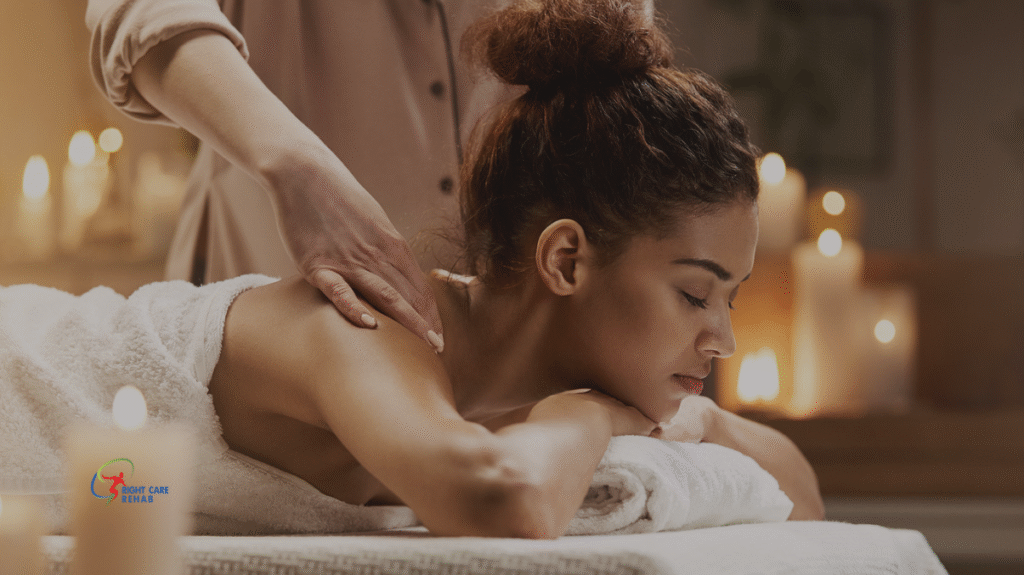
If you have never had a professional massage, the idea of it can feel a bit awkward. Let me walk you through it so you can feel prepared and at ease. Your session starts with a brief conversation in a quiet, private room. Your therapist will ask about your health history, any areas of pain or concern, and what you hope to get from the session. They will explain what is going to happen and answer any questions. Then, they will step out so you can undress to your comfort level and lie on a padded table, under a clean sheet and blanket. During the massage, only the area being worked on will be uncovered. You can always speak up if the pressure is too much or too light. You are in control. Many people close their eyes and drift into a peaceful state. Afterward, you will be left alone to get dressed slowly. The team at Right Care Rehab is committed to making your experience safe, comfortable, and deeply relaxing.
How Massage Fits Into Your Bigger Health Picture
At Right Care Rehab, we never see massage therapy as an island unto itself. It works best when it is part of a larger, thoughtful plan. For example, a massage session before a physiotherapy appointment can warm up tight muscles, making your exercises more effective. After a chiropractic adjustment, massage can help the surrounding muscles relax and accept the new alignment. For someone recovering from an injury, regular massage can speed healing by improving blood flow to damaged tissues. Our therapists communicate with each other. We share notes, not gossip, but clinical insights about how your body is responding. This means your massage is not separate from your other care. It is woven into the fabric of your overall wellness plan. At Right Care Rehab, we believe in teamwork, and you are the most important member of that team.
Is Massage Therapy Safe for Everyone?
This is a fair question and one we welcome openly. Massage therapy is very safe for most people when performed by a trained and licensed professional. However, there are times when caution is needed. If you have certain conditions like deep vein thrombosis, severe osteoporosis, or open wounds, we may need to modify or avoid certain techniques. Pregnant women can benefit greatly from massage but require specially trained therapists who understand prenatal care. Your first session always includes a health history screening to identify any reasons for caution. Our job is to help you, not to cause harm. We will always err on the side of safety and honesty. At Right Care Rehab, your wellbeing is the only thing that matters.
Giving Yourself Permission to Receive Care
I have noticed something interesting over my years in practice. Many people are happy to give care to others but struggle to receive it themselves. They feel guilty taking an hour for themselves, or they think their pain is not “bad enough” to warrant help. Let me tell you plainly, you deserve care simply because you are a person living in a body. Your body carries you through every single day. It absorbs stress, it works hard, and it asks for very little in return. Massage therapy is a way of saying thank you to your body. It is a way of listening to what it needs. If you have been carrying tension, pain, or fatigue, you do not need to carry it alone. At Right Care Rehab, we are here to help you put that weight down, even if just for a little while.
Taking the First Step Toward Feeling Better
Healing does not always happen in dramatic leaps. Sometimes it happens in quiet moments, when a skilled pair of hands helps a tight muscle finally let go. Sometimes it happens when you walk out of a session feeling lighter, not just in your body but in your mind. Massage therapy offers that kind of gentle, profound relief. It is a practice as old as human history, refined by modern training and understanding. If you are curious about what it could do for you, we invite you to try it. At Right Care Rehab, our massage therapists are ready to welcome you with skill, warmth, and respect. You do not need to have a specific injury or a doctor’s referral. You just need to be ready to give yourself the gift of care. Call us today to book your session and experience the healing power of touch for yourself.
