
Concussion Treatment: Finding Your Way Out of the Fog
Concussion Treatment is important after a head injury, even if the symptoms seem mild. Let me tell you about a young woman named Jess. She was a college student until a fall during a soccer match changed everything. At first, she thought she was fine and even finished the game. By the next day, she had a severe headache, sensitivity to light, dizziness, and trouble concentrating. She struggled to remember simple things, and everyday tasks became difficult. Her friends thought she was overreacting, which made her feel isolated. With the right care and enough time, Jess recovered, graduated on time, and now works as a nurse. At Right Care Rehab, we help people understand concussion symptoms and take the right steps toward a safe recovery.
What a Concussion Treatment Really Is
Let’s start with the basics. A Concussion is a mild traumatic brain injury. Those words sound scary, I know. But “mild” does not mean it feels mild. It means it is not life-threatening in most cases. Here is what happens inside your head. Your brain is soft, about the consistency of firm jelly. It floats inside your skull surrounded by protective fluid. When your head stops suddenly, like in a fall, a car crash, or a sports collision, your brain keeps moving and bumps against the hard bone of your skull. This stretches and damages tiny nerve cells. It is not about visible bleeding or bruising. It is about a microscopic injury that disrupts the way your brain cells communicate with each other. This is why you might feel foggy, slow, or have trouble finding words. Your brain’s wiring is temporarily scrambled. The good news is that brains are remarkably good at healing when given the right support. At Right Care Rehab, we provide that support.
Your First Visit: Mapping the Way Forward
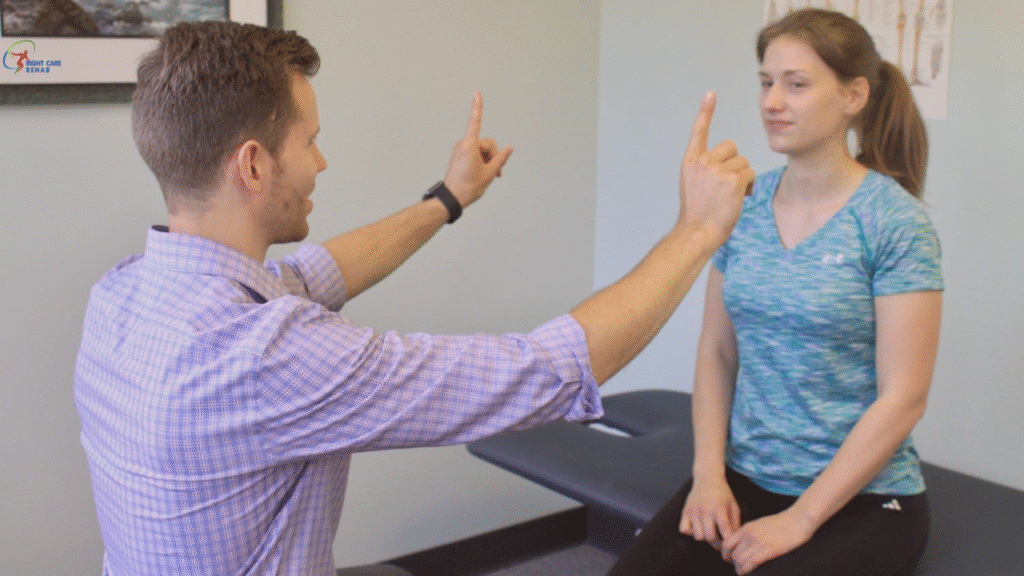
Walking into a clinic after a head injury can feel daunting. Your brain is already tired, and the thought of answering questions might exhaust you. Let me tell you exactly what happens so you can feel prepared. Your first visit is a conversation, slow and patient. We will ask about your injury, how it happened, and every symptom you have noticed since. We want to know what makes things better and what makes things worse. Then, we will do some gentle testing. This is not about passing or failing. It is about understanding which systems in your body have been affected. We might check how your eyes track and focus together, because vision issues are very common after Concussion. We will assess your balance, seeing how steady you are in different positions. Also, we will check your neck, because whiplash often occurs at the same time and causes its own set of symptoms. By the end, we will have a clear map of where you are starting from. At Right Care Rehab, this map guides everything we do next.
The Old Way Versus the New Way
For a long time, the standard advice for Concussion was complete rest. Stay in a dark room, avoid all stimulation, and wait. We now know that approach can actually make things worse. Prolonged isolation can lead to anxiety, depression, and increased sensitivity to light and sound. Your brain still needs some activity to heal. The new approach is active, but careful. We believe in graded exposure, which means slowly and gently reintroducing activities in a controlled way. We might start with a very short walk, just five minutes, and see how your brain responds. If that goes well, we slowly increase the time. We use specific exercises to retrain your vision and your balance. We give you strategies for managing cognitive tasks like reading or using a computer. The goal is to challenge your brain just enough to stimulate healing, but not so much that you crash. At Right Care Rehab, we find that sweet spot together.
The Neck Connection Treatment You Might Not Know About
Here is something many people do not realize. Your neck is often injured in the same moment that causes a Concussion Treatment. The same force that whips your head back and forth also strains the muscles and joints in your neck. And here is the tricky part: neck injuries can cause headaches, dizziness, and foggy thinking that feel exactly like Concussion symptoms. If we only treat your brain and ignore your neck, you might not get fully better. This is why our assessments always include a thorough check of your cervical spine. We look for stiffness, tenderness, and restrictions in movement. Treating the neck with gentle hands-on therapy can often relieve symptoms that were mistakenly attributed solely to the brain. At Right Care Rehab, we look at the whole picture, not just one piece.
Vision and Balance: The Hidden Players
Your vision and your balance are deeply connected to your brain, and both are often disrupted after a Concussion. You might not even realize it. Perhaps you feel dizzy in busy stores or bump into door frames more often. Maybe reading makes your eyes ache, or you feel nauseous when you watch things move quickly. These are signs that your visual and vestibular systems, your inner ear, are out of sync. We use specific exercises to retrain these systems. Eye-tracking exercises, balance challenges, and head-movement drills all help your brain relearn how to process sensory information correctly. It is like physical therapy for your vision and balance. At Right Care Rehab, we have therapists trained in these specialized techniques to help you feel steady and clear again.
You Will Get Through This
If you are in the middle of Concussion recovery, it can feel endless. The fog can feel permanent. I want to offer you some hope. Almost everyone with a Concussion gets better. It takes time and the right kind of help, but brains are built to heal. Your job right now is to be patient with yourself and to seek the support you need. You do not have to figure this out alone. Jess got through it, and so can you. At Right Care Rehab, we have walked this path with many people. We know the way through the fog. Let us walk it with you. Call us today to schedule an assessment. Let us start building your roadmap back to clarity, to energy, and to the life you love.
